Latest update March 28th, 2026 12:30 AM

Apr 21, 2025 Features / Columnists, Peeping Tom
Kaieteur News- The Guyana Police Force (GPF) is in the throes of a chronic manpower crisis. It is no secret that the Force remains seriously short-staffed, a predicament that is unlikely to be resolved anytime soon given the growing reluctance of many young people to join the uniformed ranks.
The issue is not simply one of salary; it’s also about lifestyle. Many prospective recruits are turned off by the regimentation, the strict hierarchies, and the stress of wearing a uniform. This has created a bottleneck in recruitment efforts and has left the Force stretched dangerously thin, especially at a time when crime continues to evolve in complexity.
Given this context, it is time for the Guyana Police Force to abandon its outdated, rigid approach to staffing and seriously consider greater integration of civilians into non-core policing functions. A more flexible, inclusive and modern model—one that includes contract and civilian staff—can significantly bolster the operational capacity of the Force without placing additional strain on its limited uniformed officers. There is no reason why the GPF must continue to bear full responsibility for functions that do not require an armed presence or police powers. The manpower shortage demands creative solutions, and civilian integration is among the most logical and long overdue.
Take, for example, the area of crime prosecution. Presently, police prosecutors are drawn from the uniformed ranks. But why? Guyana is home to hundreds of young, ambitious university graduates in the fields of law, sociology, and criminology—many of whom are either awaiting admission to the Hugh Wooding Law School or entry into the University of Guyana’s Law Programme. These individuals could be trained and employed on a contract basis to serve as prosecutors in the magistrates’ courts. Not only would this provide valuable experience for aspiring legal minds, but it would also allow more police officers to return to investigative duties, where their presence is sorely needed.
Similarly, the area of forensic science offers ripe opportunities for civilian integration. The modern fight against crime depends heavily on forensics—DNA analysis, digital evidence, ballistics, toxicology, and trace evidence. Yet, for the most part, these responsibilities remain under-resourced within the GPF. There is a pool of university and high school graduates with science backgrounds who, with the right training and equipment, could vastly enhance the GPF’s forensic capabilities. Employing them as civilian forensic technicians would relieve pressure from investigators and also improve case-solving efficiency.
There are also administrative and technical areas that need not consume the time and energy of sworn officers. Consider immigration services, for instance. Currently, uniformed police personnel are involved in processing passport applications and overseeing immigration procedures, even though the actual printing of passports is outsourced. Why not outsource the entire immigration service function to a competent private firm, under appropriate supervision and oversight? This would free up uniformed officers for field operations and reduce inefficiencies in service delivery.
The same can be said for the issuance of motor vehicle fitness certificates and driver’s licensing. With the explosive increase in vehicles on our roads, it is both logistically impossible for the GPF to carry out proper inspections with its current staffing levels. The fact is that this entire issue of certification is outmoded and should be abolished. Most of the vehicles on the road today are fit and proper and should not even have to go in for certification. Abolish the need and implement a system in which traffic ranks can refer vehicles for secondary inspections if they determine that these vehicles are not roadworthy. At present, there are defective trucks on our roads that should be in a dump site and such a system would allow for these vehicles to be subject to a process of selective fitness certification.
Then there are special event security and traffic management responsibilities, such as those required during international cricket matches or national festivals. These events demand a large police presence, which places even greater strain on the already limited manpower of the GPF. But there is no reason why private security firms, operating under special licenses and granted temporary powers of arrest, cannot fill these roles. This approach has been adopted successfully in many parts of the world and can work just as well in Guyana with the right regulatory safeguards.
Critics will say these ideas are not new—and they’re right. Many of these proposals have been floated before, only to be met with bureaucratic inertia. The problem is not a lack of solutions, but a lack of will. The authorities seem fixated on the traditional model of law enforcement, one that glorifies uniformed service while ignoring more efficient and inclusive approaches to modern policing.
But the facts are stubborn. The Guyana Police Force is overburdened. It is under-resourced. And it is increasingly unable to keep pace with the demands of public safety. The continued insistence on doing more with less is not sustainable.
Greater civilian involvement is not about privatizing the Force or undermining its authority. It is about strengthening it. It is about allowing sworn officers to focus on law enforcement and public safety, while qualified civilians take on complementary roles that do not require police powers. It is about modernizing the institution in a way that reflects both its challenges and its potential.
The time has come for a shift in mindset. Civilianization is not a threat—it is a solution. And if we are serious about building a more effective, responsive, and professional police service, we must embrace it without delay. (The views expressed in this article are those of the author and do not necessarily reflect the opinions of this newspaper.)
Subscribe to get the latest posts sent to your email.
Your children are starving, and you giving away their food to an already fat pussycat.
Mar 28, 2026
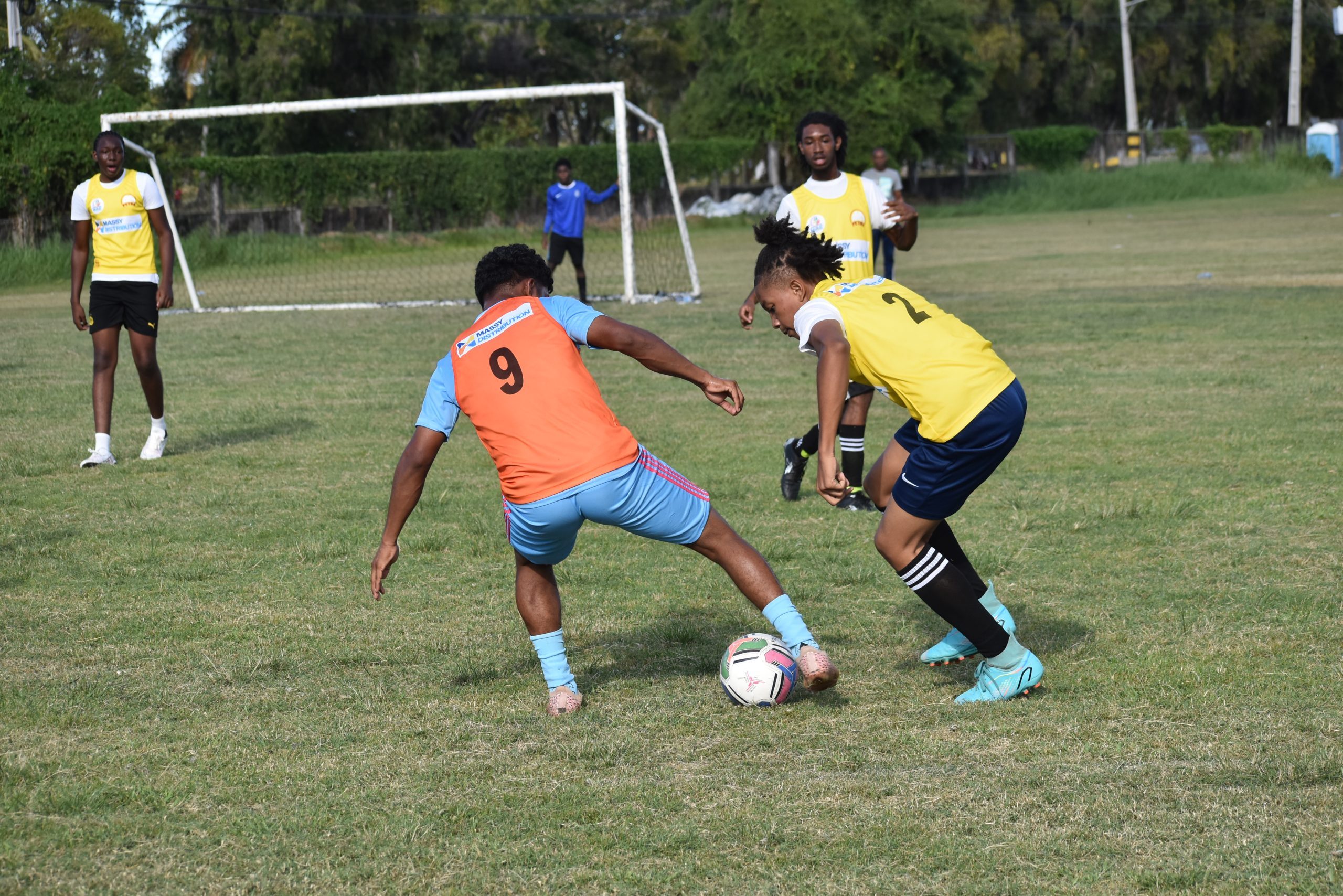
– Massy Distribution Schools U18 Football kick off round 2 action today Kaieteur Sports – The race for knockout qualification sharpens today as round two of the 12th Annual Massy...Mar 28, 2026
(Kaieteur News) – Vice President Bharrat Jagdeo arrived at the 124th Special Meeting of the Council for Trade and Economic Development (COTED) brandishing what he seemed to believe was a cudgel of hard truth: the Caribbean must move “from rhetoric to realism.” One almost admires his...Mar 22, 2026
By Sir Ronald Sanders (Kaieteur News) – The war in Iran is already at Caribbean doors. The attacks in Iran and the Gulf are being justified by some on the grounds that Iran’s record on terrorism, nuclear ambition, and regional meddling leaves the “free world” with no choice but to act...Mar 28, 2026
Hard Truths by GHK Lall (Kaieteur News) – The father-son Mohamed team heads to the CCJ. It’s honored as the apex court. Though impressive sounding, and deserving that loftiness, here’s something more visceral. Last Chance Chambers. Lose there, and it’s finished. Handcuffs...Freedom of speech is our core value at Kaieteur News. If the letter/e-mail you sent was not published, and you believe that its contents were not libellous, let us know, please contact us by phone or email.
Feel free to send us your comments and/or criticisms.
Contact: 624-6456; 225-8452; 225-8458; 225-8463; 225-8465; 225-8473 or 225-8491.
Or by Email: glennlall2000@gmail.com / kaieteurnews@yahoo.com