Latest update March 30th, 2026 12:35 AM


Latest News
- ‘Guyana will never see fair share of profits without ring-fencing’ – AFC
- Guyana’s peak electricity demand to surpass 1,500 MW by 2030 – GPL
- Teen girl killed in Moblissa crash
- Unidentified teen found floating in Demerara River
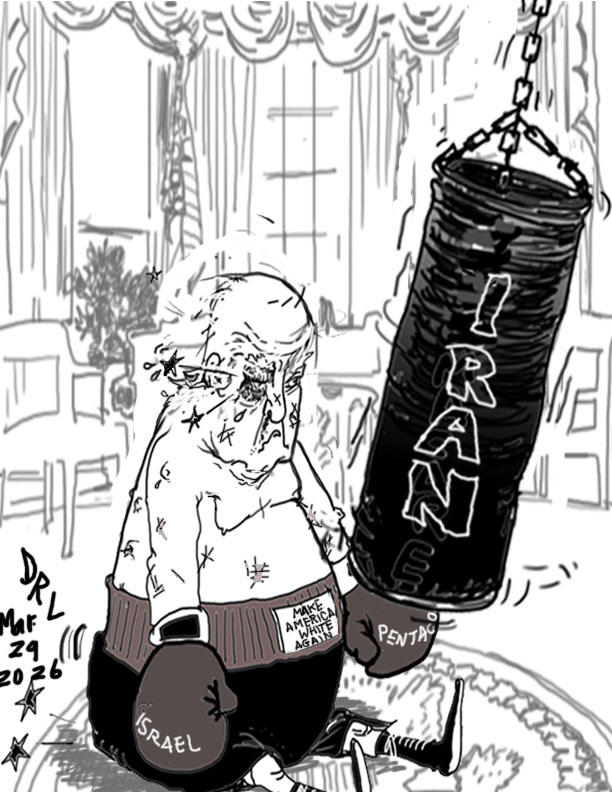
- War on Iran: U.S.-Israel dropped 12,000 bombs, hit 10,000 targets, 1,937 dead
Govt. admits spill could hit shores before capping stack deployment but says other measures would reduce potential of oiling
Kaieteur News- The Government of Guyana (GoG), through the Ministry of Natural Resources (MNR), admitted on Saturday that an oil spill could hit the country’s seashore before the capping stack is deployed, but said other measures will be taken to avoid the potential of oiling.

Minister of Natural Resources, Vickram Bharrat
In an article dated April 6, 2025, under the headline ‘Oil spill will hit Guyana’s shores before capping stack arrives to plug leak,’ Kaieteur News reported that an ExxonMobil team confirmed that the 93,000-pound piece of equipment will take “several days” to arrive at its destination. This, while an Environmental Impact Assessment (EIA) conducted by Exxon’s consultant, Environmental Resources Management (ERM), found that an oil spill could hit parts of Guyana in as little as one day.
The Ministry, in its statement, admitted, “According to the EIA, stochastic models predicted oiling of the Guyana shoreline for the Most Credible and Maximum Worst Case Discharge (WCD) scenarios. For the June to November season, the Most Credible WCD scenario shows that there is a 5 to 10 percent chance of oil reaching the Region 1 shoreline within 5 to 15 days.”
Additionally, “For the Maximum WCD scenario, during the December to May season, the model predicted there is a 5 to 70 percent chance of oil reaching the coast of Region One within 1 to 10 days.”
MNR, however, pointed out that the study also indicates that other measures would be taken to avoid the potential of seashore oiling within those periods outlined.
According to the EIA, “This stochastic modeling does not account for any oil spill response (e.g., aerial, vessel, or subsea dispersant application; offshore containment and recovery; or source control operations), so any preventive measures taken to keep oil from reaching the coast during a response would reduce the potential of shoreline oiling in Guyana below the percentages cited above.”
36-hour deployment
Meanwhile, the Ministry reiterated that the capping stack is only used when all other well containment methods, such as the preinstalled blowout preventer, fail, and can be deployed to such an incident within 36 hours. Further, with the equipment now stored at the Guyana Shore Base Inc (GYSBI), government said deployment can be shorter but is dependent on the tide and the time of occurrence.
Notably, the Ministry referenced the Oil Spill Response Plan for Guyana Operations (OSRP), which it said is further complemented by other embedded controls, mitigation measures and plans that support emergency response preparedness. “Within this OSRP are the plans to implement various oil spill response equipment to reduce the potential of shoreline oiling,” the Ministry stated.
It is important to note that Kaieteur News, in its article, not only highlighted the time it would take for an oil spill to hit the country’s shoreline, but also prudently reported on the measures the company said it would take to avoid such an event.
See a section of that article below:
EMGL Projects Manager, Rebecca Cvikota, assured that in addition to mobilizing the capping stack, ExxonMobil would activate its emergency response team immediately and start working towards addressing the situation through various methods, including the use of dispersants.
Cvikota added, “Many countries have to wait for the capping stack to arrive from a different destination, which can take time for it to get here in country; ours is here already, so it’s a matter of accessing it (and) assembling it because there is some assembly required. We preserve it properly, but we need to assemble it to send it offshore.”
The In-Country Projects Manager was also keen to note that there are instances where the capping stack may not be required to stop a spill. She explained that the tool is only used in specific situations.
“In some of our previous presentations, we talked about subsea trees and those sit on top of the well-head…and that tree has all kinds of wells attached to it that we would close immediately in the event we would have any kind of oil leak. However, if the tree wasn’t working or if there was something wrong with that tree, that’s when the capping stack would be deployed,” Cvikota stated.
Discover more from Kaieteur News
Subscribe to get the latest posts sent to your email.
Similar Articles

THE BLUNT OF THE DAY
Sports

Features/Columnists

Sir. Ronald Sanders

The GHK Lall Column

Weekend Cartoon