Latest update March 26th, 2026 12:30 AM

Mar 31, 2025 Letters
Dear Editor
If there is a single reason no one, but particularly Africans, should vote for the Peoples Progressive Party (PPP) at the next general election it is the tremendous harm – waste of talent and young lives – it has caused over the last three decades. On 22/03/2025, I woke up and read that a Beterverwagting (BV) Practical Instruction Centre (PIC) has just been ‘commissioned’ to serve some 400 students and community members with hands-on skills training to improve their employability and career prospects. And that we should ‘celebrate more than just the opening of this centre. … [that] marks a significant step forward in our collective commitment to equipping individuals with the skills and knowledge necessary to excel in a rapidly evolving economy’ (VV: 22/03/2025)!
In 1994, Professor Zellynne Jennings-Craig, a Jamaican educator and researcher, said that ‘the majority of young Guyanese adults 14-25 years of age are functionally illiterate.’ i.e. had reading and writing skills that are inadequate to manage daily living and employment tasks that require reading skills beyond a basic level. When I was minister of education between 2001 and 2006, the ministry stated that a ‘quick glance at educational statistics at the national level would show that less than thirty percent of those entering secondary schools are leaving with the requisites for higher education or the job market. At present the opportunities available to the remainder for remedial education and or formal training are limited. Thus, over time we have been developing a work force whose skill development has been incidental’ (Training of Out of School Youth, MOE 2004).
In 2004, I presented a paper at the Caribbean Community’s Council for Human and Social Development arguing that TVET (technical and vocational education training) and general education should be better integrated at the secondary level. In Guyana, this viewpoint led to the establishment of the 2004 National Council for Technical and Vocational Education, the National Accreditation Council and the Basic Competency Certificate Programme (BCCP): the last was aligned to the Caribbean Examinations Council (CXC) CVQ Level 1 & 2 at the regional and international levels. The PICs and Industrial Arts Departments, wherever they existed, were to be used to provide a Skills for Life Programme (SFLP) for out of school youth and other interested persons.
The vision was that no Guyanese should be without some internationally marketable level qualification and the orientation and structure of the then existing Board of Industrial Training, that dealt largely with the apprentice process, was considered inappropriate for the necessary volume of work. The first SFLP programme began at the BV PIC in 2005 with I am informed an enrolment of approximately 60 persons, but in in about 2007 the Ministry of Education scrapped the programme and left the PICs, which the government is now ‘commissioning’, to deteriorate or collapse.
As a result, in 2010, in a letter commenting on a Kaieteur News editorial ‘15,000 semi literates each year,’ I stated that ‘there is little doubt that one of the major problems that has faced Guyana over the past decades has been the enormous waste of human resources that results from our education system and identified in your editorial. As you suggested, the impact of this waste is in many ways deleterious to our society and there certainly should be moral outrage that we appear unable to provide sensible, systematic and continuous opportunities to allow all our people to attain the good life. …. However, although it is undoubtedly true that for some time large numbers of persons have been badly left behind, it is wrong to suggest that the general orientation of universal secondary education … is to neglect poor learners. … [C]onceptually, the answer to the overall problem is quite simple. It is to make schooling more meaningful, productive and universal and simultaneously to create an informal education structure to systematically mop-up those who are now untrained’ (Kaieteur News: 01/04/10).
Fifteen years on, the VV article on the ‘commissioning’ of the BV PIC is making a similar complaint. ‘[T]he opening of this facility comes amid growing concerns about the broader challenges facing Guyana’s education system. … Guyana continues to lag its Latin American and Caribbean counterparts in education outcomes, a reality highlighted in a recent World Bank report. These setbacks are contributing to Guyana’s ongoing skills shortage, a challenge noted by the International Monetary Fund (IMF), which links the country’s educational performance to its skills gap. While the PIC promises to bridge the gap between theoretical knowledge and practical skills, it is unclear whether it will be enough to address the systemic deficiencies.’
Whatever the MOE is doing is not clear because neither theoretically nor practically has it been able to design, articulate and sell a comprehensive vision for education in Guyana. I argued before that with economic, social and technological changes gathering pace, education policy must ensure that students develop knowledge, skills and the life-long learning attitudes that will help them to meaningfully deal with a rapidly changing environment in which acquiring and manipulation of knowledge is crucial.
Employers have expressed the view that those who study the arts must pursue something in science and technology while technicians and engineers must know something about the arts. While there is general agreement that the basic subjects of the traditional curriculum are essential, the feeling is that the concept of a general education must include technical and vocational subjects. The general aim of secondary education is to provide all students with a broad-based education that will enable them to acquire the knowledge, skills, attitudes, values and core competencies that will make them rounded and productive citizens.
In 2001, the United Nations Education, Scientific and Cultural Organisation (UNESCO) and the International Labour Organisation (ILO) recommendation on “Technical and Vocational Education and Training for the Twenty-first Century” defined technical and vocational education ‘as a comprehensive term referring to those aspects of the educational process involving, in addition to general education, the study of technologies and related sciences, and the acquisition of practical skills, attitudes, understanding and knowledge relating to occupations in various sectors of economic and social life’.
Education should cater for all spheres of interest and abilities but should mainly perform three functions: (a) broaden educational horizons by serving as an introduction to the general world of knowledge, technology and work, (b) orient the different abilities towards preparation for further training and/or occupation and (c) promote in those who will leave formal education with no specific occupational aims or skills, attitudes likely to enhance their potential to access a first job and to continue their training and personal development.
PICs were in existence as part of the community high school process long before the PPP came to government in 1992 and as noted above, two decades ago beginning at the BV Centre, the MOE was set upon the course that it only now intends to pursue! As Indians are associated with agriculture and commerce, Africans are associated with public service and the technical and vocational trades. Whether deliberately racist or not, when one reduces the opportunities for Africans to gain marketable qualifications in or out of school in their traditional occupations and then speaks of them as constituting the ‘fertile ground’ of the ‘unlettered’ what are we doing?
Regards
Dr. Henry Jeffrey
Subscribe to get the latest posts sent to your email.
Your children are starving, and you giving away their food to an already fat pussycat.
Mar 26, 2026
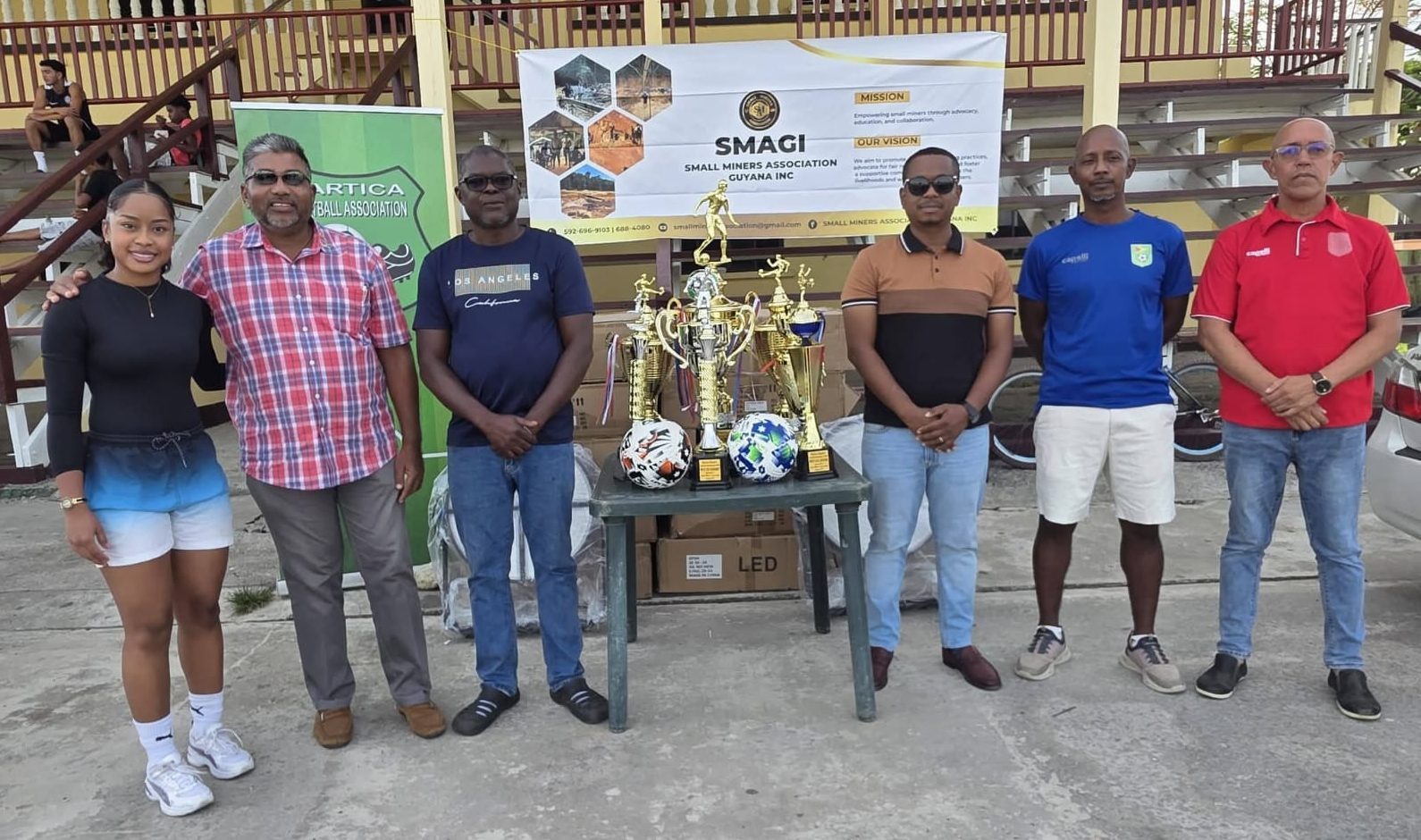
Kaieteur Sports – Football fans, players and athletes in Bartica will be delighted with the timely donation of twelve (12) LED Lights that will tremendously improve the illumination of the...Mar 26, 2026
(Kaieteur News) – Social media was once praised as a tool for connection and free expression. It allowed ordinary people to share ideas, tell stories, and participate in public debate. Today, however, it has taken a troubling turn. It has become an open platform where almost anyone can publish...Mar 22, 2026
By Sir Ronald Sanders (Kaieteur News) – The war in Iran is already at Caribbean doors. The attacks in Iran and the Gulf are being justified by some on the grounds that Iran’s record on terrorism, nuclear ambition, and regional meddling leaves the “free world” with no choice but to act...Mar 26, 2026
Hard Truths by GHK Lall (Kaieteur News) – President Ali has this marvelous gift. He reliably charges after some secondary enemy. His latest is that school gangs had better get going because his government is coming after them. Necessary; but there’s a bigger priority. A helping hand is...Freedom of speech is our core value at Kaieteur News. If the letter/e-mail you sent was not published, and you believe that its contents were not libellous, let us know, please contact us by phone or email.
Feel free to send us your comments and/or criticisms.
Contact: 624-6456; 225-8452; 225-8458; 225-8463; 225-8465; 225-8473 or 225-8491.
Or by Email: glennlall2000@gmail.com / kaieteurnews@yahoo.com