Latest update March 26th, 2026 7:55 AM

Feb 20, 2025 Letters
Dear Editor,
The sociopolitical landscape of Guyana, marked by its colonial legacy and entrenched ethnic divisions, has long demanded voices willing to confront uncomfortable truths. Dr. David Hinds, a prominent Guyanese scholar, activist, and advocate for African Guyanese empowerment, has often employed provocative language to challenge systems of oppression and internalised subjugation. His use of the term “Lick Bottom” to describe African Guyanese complicit in the oppression of their own people has sparked controversy, but it is a critique rooted in a long tradition of radical truth-telling.
To dismiss his language as divisive or disrespectful is to ignore the historical and systemic context that makes such critique necessary. Undoubtedly, Dr. Hinds’ terminology, while jarring, is a deliberate rhetorical strategy to awaken consciousness, dismantle complacency, and confront the insidious nature of internalised oppression.
Guyana’s history is steeped in colonialism, slavery, and indentureship, systems that pitted ethnic groups against one another to maintain imperial control. The British “divide and rule” policy left a legacy of tension between African and Indo-Guyanese communities, which post-independence governments have often exploited for political gain.
Within this framework, some African Guyanese individuals—particularly those in positions of political or economic influence—have historically aligned themselves with power structures that perpetuate racial inequity. This complicity, whether motivated by survival, opportunism, or internalised inferiority, reinforces systemic oppression. Dr Hinds’ use of “Lick Bottom” (a Creolised phrase akin to “bootlicking”) is not a blanket condemnation of African Guyanese people but a targeted critique of those who actively or passively uphold systems that harm their own community.
Throughout history, justice movements have relied on bold, unflinching language to disrupt apathy and galvanise action. Frantz Fanon, in “The Wretched of the Earth,” dissected the psychological violence of colonialism and the complicity of “native elites” who mimic oppressors. Similarly, Malcolm X’s indictment of “House Negroes” who prioritised proximity to white power over Black liberation was intentionally provocative. Dr. Hinds’ “Lick Bottom” operates within this tradition—it is a linguistic weapon meant to shock the conscience and force introspection. By using culturally resonant Creole phrasing, he connects with the lived experiences of ordinary Guyanese while rejecting the sanitised discourse that often obscures accountability.
Critics may argue that such language is counterproductive or “un-African,” but this misunderstands the purpose of radical critique. The term is not an insult hurled indiscriminately; it is a diagnostic tool to identify behaviours that sustain inequality. When African Guyanese politicians, for example, legitimise policies that marginalise their own communities, or when elites prioritise personal gain over collective uplift, they become enablers of oppression. Naming this betrayal is not divisive—it is a necessary step toward unity.
Some may interpret Dr. Hinds’ words as dismissive of the complex realities faced by marginalised people navigating oppressive systems. Survival, after all, often requires compromise. However, his critique is not aimed at those struggling to make ends meet but at those who wield power and consciously choose to perpetuate inequity. The “Lick Bottom” label applies to actors who, in exchange for status or privilege, legitimise policies that deny housing, education, or justice to African Guyanese. It is a condemnation of the elite who weaponise racial loyalty to shield corrupt leaders or silence dissent.
To conflate survival with complicity is to strip the term of its specificity. Dr. Hinds’ rhetoric does not blame the oppressed for their oppression but challenges those who exploit their cultural capital to deepen it. Respectability politics—the idea that marginalised groups must conform to dominant norms to earn dignity—has long stifled liberation movements. Dr. Hinds rejects this approach, recognising that politeness rarely dismantles tyranny. By using “Lick Bottom,” he refuses to soften his message for the comfort of the powerful. This mirrors the Caribbean intellectual tradition of scholars like Walter Rodney and CLR James, who linked academic rigor to grassroots mobilisation.
To demand that Dr. Hinds, adopt less confrontational language is to demand that he dilute his message. Oppressive systems thrive on euphemisms; terms like “collaborator” or “Uncle Tom” (itself a loaded historical reference) may carry academic weight, but they lack the visceral impact needed to stir a populace numbed by generations of exploitation.
Dr. Hinds’ use of “Lick Bottom” is not an act of disrespect but an act of love—a refusal to let his community succumb to the lies of respectability or the seduction of tokenism. It is a call to critical consciousness, urging African Guyanese to hold power accountable, even when it resides in familiar hands. The term’s harshness reflects the harshness of the conditions it describes.
In a nation still grappling with the ghosts of colonialism and the fresh wounds of ethnic politicisation, Dr. Hinds’ work remains vital. His language may unsettle, but precisely this discomfort signals its transformative potential. To dismiss it is to side with the silence that enables oppression. To engage with it is to take the first step toward liberation.
Finally, I do not seek to endorse ad hominem attacks but to contextualise the rhetorical strategies of a scholar-activist operating within a long tradition of anti-oppressive resistance. The struggle for justice demands both truth and courage, and Dr. Hinds’ voice exemplifies both.
Sincerely,
Lelon Saul
(In defence of Dr. David Hinds: The Radical Language of Liberation and the Critique of Complicity)
Subscribe to get the latest posts sent to your email.
Your children are starving, and you giving away their food to an already fat pussycat.
Mar 26, 2026
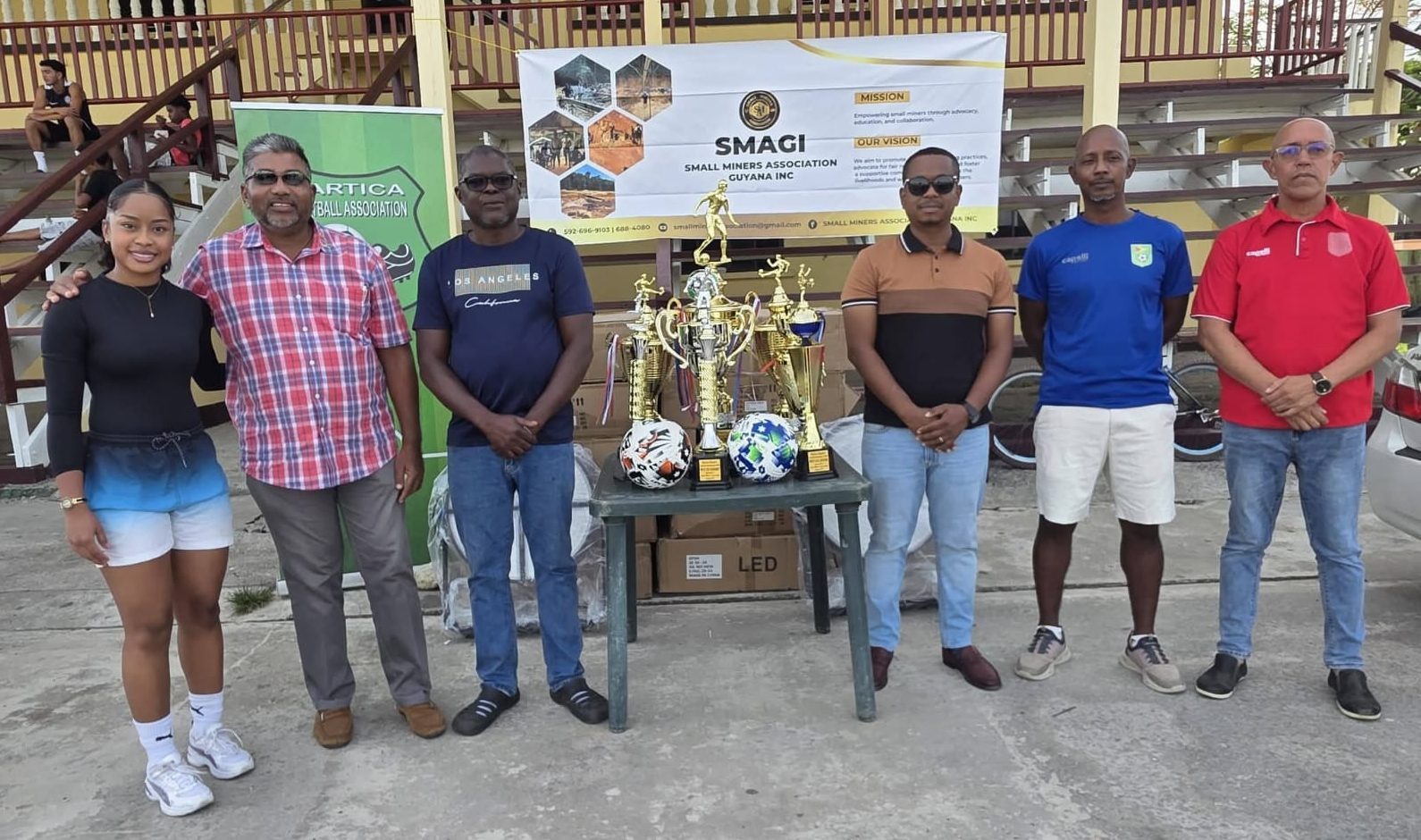
Kaieteur Sports – Football fans, players and athletes in Bartica will be delighted with the timely donation of twelve (12) LED Lights that will tremendously improve the illumination of the...Mar 26, 2026
(Kaieteur News) – Social media was once praised as a tool for connection and free expression. It allowed ordinary people to share ideas, tell stories, and participate in public debate. Today, however, it has taken a troubling turn. It has become an open platform where almost anyone can publish...Mar 22, 2026
By Sir Ronald Sanders (Kaieteur News) – The war in Iran is already at Caribbean doors. The attacks in Iran and the Gulf are being justified by some on the grounds that Iran’s record on terrorism, nuclear ambition, and regional meddling leaves the “free world” with no choice but to act...Mar 26, 2026
Hard Truths by GHK Lall (Kaieteur News) – President Ali has this marvelous gift. He reliably charges after some secondary enemy. His latest is that school gangs had better get going because his government is coming after them. Necessary; but there’s a bigger priority. A helping hand is...Freedom of speech is our core value at Kaieteur News. If the letter/e-mail you sent was not published, and you believe that its contents were not libellous, let us know, please contact us by phone or email.
Feel free to send us your comments and/or criticisms.
Contact: 624-6456; 225-8452; 225-8458; 225-8463; 225-8465; 225-8473 or 225-8491.
Or by Email: glennlall2000@gmail.com / kaieteurnews@yahoo.com